Choosing the Right Texture for Glass

Texture for Glass – In the world of bespoke glass packaging, the way a brand “feels” in the hand is just as important as how it looks on the shelf. Two of the most effective ways to add this tactile dimension are embossing and engraving. While they both create permanent marks, they achieve opposite physical effects.
At VetroPuro, we help you navigate these techniques to ensure your bottle reflects your brand’s prestige. Here is the essential guide to understanding the difference.
Embossing: The Power of the Raised Design
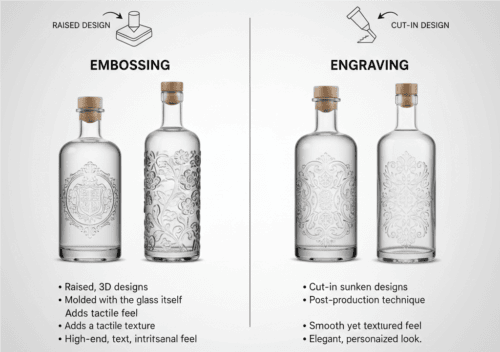
Embossing is the process of creating a raised relief on the glass surface. In the context of mass-produced glass bottles, this is usually achieved during the manufacturing stage. The design is integrated into the production mould, so as the molten glass is blown into the shape, the logo or pattern is “pushed out” from the body.
- The Result: A three-dimensional, tactile design that stands out from the surface.
- Tactile Feel: Interactive and premium; it invites the consumer to touch the bottle.
- Best For: Bold logos, brand names, or patterns intended for mass production. Since the design is part of the glass itself, it is incredibly durable and cost-effective once the initial mould is created.
Engraving: Precision in the Recess
Engraving is the opposite of embossing; it involves carving or etching into the glass surface. This is typically a post-production “ennoblement” technique performed using high-precision lasers or mechanical rotary tools.
- The Result: A design that is recessed or cut into the glass. It often produces a beautiful frosted or “white” appearance where the laser has disturbed the surface.
- Tactile Feel: Sharp, clean, and professional. You can feel the depth of the lines with your fingernail.
- Best For: High-detail artwork, fine lines, small text, or individual personalisation. Because it doesn’t require a custom mould for every change, it is the superior choice for limited editions or luxury gift sets.
Key Differences at a Glance
| Feature | Embossing | Engraving |
| Direction | Pushes Out (Raised) | Carves In (Recessed) |
| Process | Created during moulding | Post-production (Laser/Tool) |
| Precision | Best for bold, simple shapes | Ideal for intricate, fine detail |
| Durability | Permanent (part of the glass) | Permanent (etched into surface) |
| Cost Basis | High setup (mould), low unit cost | Low setup, higher cost per unit |

Which One Should You Choose?
The decision often comes down to your production volume and design complexity:
Choose Embossing if you are planning a large production run (e.g., 20,000+ units) and want your branding to be an inseparable part of the bottle’s silhouette. It is perfect for heritage brands that want a classic, “moulded-in” feel.
Choose Engraving if your design features very fine lines that a glass mould cannot capture, or if you need to personalise bottles with individual names or limited-edition numbers.
The VetroPuro Expert Touch
At VetroPuro, we provide both services. Our in-house design team can help you decide if a raised logo or a deep-cut laser etching will better serve your brand’s aesthetic. We ensure that whichever path you choose, the final result meets the highest standards of clarity and “Extra White” brilliance.
Would you like to see a side-by-side comparison of an embossed logo versus an engraved one? Contact us today for samples or a technical consultation on your design.