
Glass Packaging: Electroplating and Hot Stamping

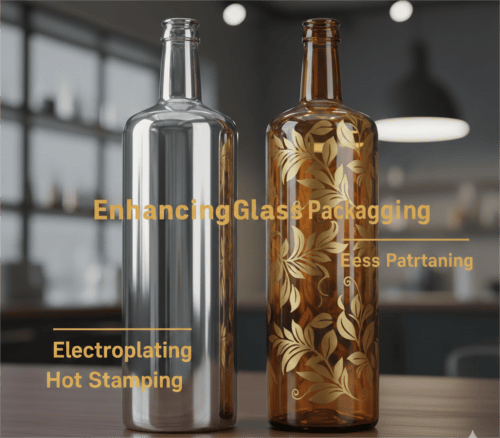
In the competitive landscapes of perfumery, high-end spirits, and cosmetics, packaging serves as the primary touchpoint for brand identity. To achieve a premium aesthetic, two industrial decoration techniques stand out: electroplating and hot stamping. Both methods transform standard glass into luxurious vessels, albeit through distinct processes and visual outcomes.

Electroplating: The Mirror-Like Finish
Electroplating (or metallisation) is an electrochemical process that applies a uniform, ultra-thin layer of metal to a glass surface. Because glass is naturally non-conductive, it must first be treated with a conductive primer. The bottle is then submerged in an electrolytic bath where metal ions—such as gold, silver, copper, or nickel—are deposited via an electric current.
Key Advantages:
- Aesthetic Brilliance: It produces a flawless, mirror-like lustre or a sophisticated matte metallic effect that is impossible to achieve with standard sprays.
- Durability: The metallic bond increases the bottle’s resistance to scratches and mechanical wear.
- Functional Protection: Beyond aesthetics, the metal layer acts as a barrier against oxygen and moisture, potentially extending the shelf life of sensitive formulas.
- Versatile Palette: By layering different metals, manufacturers can create a “rainbow” of bespoke colours and creative gradients.
Hot Stamping: Precision and Texture

Hot stamping is a dry printing technique that uses heat and pressure to transfer pre-dried ink or metallic foils from a carrier ribbon onto the glass. For glass applications, a specialized UV-cured primer is typically screen-printed onto the bottle first to ensure the foil adheres permanently.
Key Advantages:
- Tactile Impact: The process often leaves a slightly raised or debossed finish, providing a sensory experience that reinforces brand quality.
- Geometric Flexibility: Advanced machinery allows for 360° application, making it compatible with round, square, oval, or flat-shaped bottles.
- High Contrast: It is the ideal method for intricate logos, monograms, and fine patterns, offering vibrant metallic highlights that “pop” against clear or coated glass.
- Resilience: Modern hot stamping foils are highly resistant to chemical exposure and physical abrasion.
Comparison at a Glance
| Feature | Electroplating | Hot Stamping |
| Primary Effect | Full-body metallic coating | Precise accents and logos |
| Texture | Smooth, integrated layer | Slightly raised/tactile |
| Typical Use | Total bottle transformation | Branding and intricate detailing |
| Base Requirement | Conductive coating | Screen-printed primer |
Conclusion
Whether aiming for the bold, reflective statement of electroplating or the refined, intricate detailing of hot stamping, both techniques significantly elevate the perceived value of glass packaging. These methods can also be combined with frosting or spray painting to create multi-layered, bespoke designs that capture consumer attention on the shelf.