Exporting Glass Packaging to US and EU

Exporting Glass Packaging to US and EU requires strict adherence to food-contact safety regulations. While glass is generally considered “GRAS” (Generally Recognised as Safe), both regions mandate rigorous testing to ensure that heavy metals do not migrate into the contents.
Regulatory Requirements for the United States
The Food and Drug Administration (FDA) sets the baseline for all glass packaging. Compliance ensures that materials do not transfer harmful constituents to food or beverages.
- Lead and Cadmium Limits: The primary focus is on extractable lead and cadmium levels, particularly for decorated or coloured glass.
- California Proposition 65: If products are sold in California, they must undergo additional testing for heavy metals. Failure to meet these specific limits requires a “clear and reasonable” warning label.
- Customs Documentation: Beyond safety, shipments require a Commercial Invoice, Packing List, and a Certificate of Origin.
Regulatory Requirements for the European Union
EU regulations are notably more complex, often requiring a Declaration of Compliance (DoC) that proves the material meets safety standards across multiple member states.
- Framework Regulation (EC) No 1935/2004: This is the overarching law ensuring that food-contact materials do not endanger human health or bring about an unacceptable change in the composition of the food (organoleptic properties).
- LFGB (Germany): Often regarded as the “gold standard” in Europe, LFGB testing is more stringent than the general EC directive. It includes sensory testing to ensure the glass does not alter the taste or smell of the product.
- National Directives: Certain countries, such as France (DGCCRF), maintain additional specific requirements that must be verified before dispatch.
Recommended Quality Benchmarks
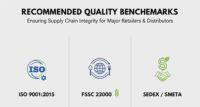
While not always legally mandatory for customs clearance, the following certifications are frequently required by major retailers and distributors to ensure supply chain integrity:
| Certification | Focus Area | Value Proposition |
| ISO 9001 | Quality Management | Guarantees consistent manufacturing processes. |
| BRCGS / FSSC 22000 | Packaging Safety | Demonstrates robust control over contamination. |
| ISO 14001 | Environmental Impact | Signals a commitment to sustainable production. |
Essential Steps for Exporters
- Independent Laboratory Testing: Secure third-party lab reports specifically for lead/cadmium extraction and migration.
- Multilingual Documentation: For the EU, certificates should ideally be prepared in English and the language of the destination country.
- Importer Verification: Always confirm with your local partner that the specific “batch” testing meets current regional standards, as regulations are subject to frequent updates.
Conclusion
Navigating these markets requires a proactive approach to safety documentation. By securing FDA approval for the US and meeting the high threshold of the LFGB for the EU, manufacturers can ensure a seamless entry into these lucrative markets.