Timelines for Glass Bottle Prototype Development

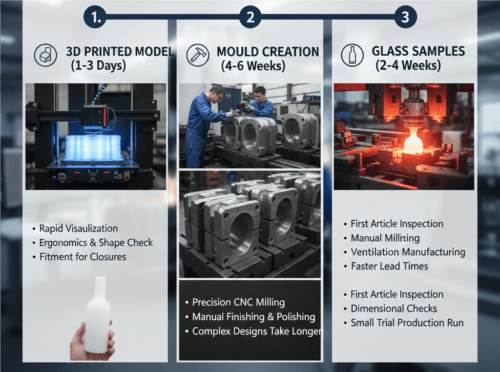
Timelines for Glass Bottle Prototype Development – For brands launching new products, understanding the lead times for glass bottle prototyping is crucial for synchronising marketing and filling schedules. While timelines vary based on design complexity, the journey from initial concept to a physical sample typically spans 4 to 8 weeks, with the entire project reaching completion in 4 to 6 months.
The Prototyping Lifecycle
The development process is divided into several technical milestones, each requiring precise execution to ensure the final product is fit for purpose.
1. Technical Design and CAD Approval (1–2 Weeks)
The process begins with translating a creative vision into a technical blueprint. Engineers create 3D CAD (Computer-Aided Design) models that specify wall thickness, weight distribution, and neck finish. Approval of these drawings is the “green light” for physical tooling.
2. Mould Engineering (4–6 Weeks)
Once the design is finalised, high-precision metal moulds are machined via CNC technology. This is the most time-intensive phase of prototyping. For bespoke shapes with intricate embossing or unique geometries, this stage can extend towards the six-week mark.
3. Sample Production and Review (2–4 Weeks)
With the initial “sample moulds” complete, the factory runs a limited trial. These physical prototypes are then dispatched to the client for rigorous evaluation. At this stage, brands test the bottle’s “hand-feel,” visual clarity, and compatibility with intended closures (corks or caps).
4. Iterations and Refinements (Variable)
It is common for the first sample to require minor adjustments. Each revision round—such as fine-tuning a logo’s depth or adjusting the base stability—typically adds 2 to 4 weeks to the timeline, as the metal moulds must be modified or recast.
Key Factors Influencing the Schedule

Several variables can expedite or delay the arrival of your prototypes:
- Design Complexity: Intricate engravings, non-standard shapes, or exceptionally heavy bases require more sophisticated tooling and slower cooling cycles.
- Factory Backlog: Production timelines often fluctuate with seasonal demand. The lead-up to the festive period usually sees a surge in spirit and wine packaging orders, which can extend lead times.
- Glass Type and Colour: Standard “flint” (clear) glass is the quickest to prototype. Requests for specific tints, such as cobalt blue or bespoke amber, may require waiting for specific furnace “runs.”
- Testing Requirements: If the prototype requires formal certification (such as internal pressure testing for carbonated drinks), additional time must be allocated for laboratory analysis.
Summary: Estimated Development Phases
| Phase | Duration | Output |
| CAD & Technical Specs | 1–2 Weeks | Digital Blueprint |
| Mould Construction | 4–6 Weeks | Physical Tooling |
| Sampling & Dispatch | 1–2 Weeks | Initial Prototypes |
| Revision Rounds | 2–4 Weeks | Modified Samples |
| Mass Production Setup | 3–4 Weeks | Final Production Molds |
Conclusion
Prototyping is a meticulous phase where patience ensures quality. To mitigate delays, it is advisable to finalise design concepts at least six months before your scheduled product launch. This buffer allows for necessary iterations without compromising the integrity of the final glass vessel.
Would you like me to prepare a project schedule template to help you track these milestones for your upcoming product launch?