
Glass Finishes: Electroplating and Hot Stamping

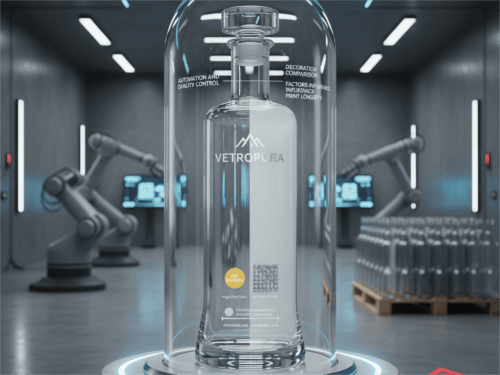
Glass bottles can be transformed into luxury vessels using electroplating and hot stamping. These industrial techniques are highly favoured in the perfumery, cosmetics, and high-end spirits sectors to elevate brand perception through metallic brilliance and tactile depth.
Hot Stamping: Precision Metallic Accents
Hot stamping—often referred to as hot foil stamping—is a dry printing process that uses heat and pressure to transfer a metallic or pigmented foil onto the glass.
- The Process: A heated die presses the foil onto the bottle’s surface. Because glass is non-porous, a screen-printed primer or UV-cured base ink is typically applied first to ensure the foil adheres permanently.
- Visual Impact: It produces vibrant, reflective highlights in gold, silver, or copper. Unlike standard inks, hot stamping offers a slightly raised, tactile feel that signals quality.
- Versatility: Advanced machinery allows for application on flat, square, or cylindrical bottles, making it ideal for intricate logos and monograms.
Electroplating: Total Metallic Transformation
Electroplating (or metallisation) involves depositing a thin, uniform layer of metal—such as gold, silver, chrome, or nickel—onto the glass via an electrochemical bath.
- The Process: The glass must first be coated with a conductive layer. The bottle is then submerged in an electrolytic solution where metal ions are deposited under an electric current, resulting in a flawless, integrated finish.
- Visual Impact: It creates a striking, mirror-like lustre or a sophisticated matte metallic effect. It can also be used to achieve “rainbow” or gradient finishes that are impossible to replicate with traditional sprays.
- Functional Benefits: Beyond aesthetics, the metallic layer enhances surface durability, provides superior scratch resistance, and can protect light-sensitive contents from UV degradation.

Comparison of Decoration Techniques
| Feature | Hot Stamping | Electroplating |
| Primary Effect | Precise accents and logos | Full-body metallic coating |
| Texture | Slightly raised / Tactile | Smooth and integrated |
| Durability | High (Scratch resistant) | Exceptional (Corrosion resistant) |
| Best For | Branding and patterns | Total bottle transformation |
Summary
Both techniques offer a premium touch that justifies a higher price point. While hot stamping is perfect for detailed branding and high-contrast accents, electroplating provides a complete, high-fashion makeover. For a truly bespoke design, these methods are often combined with frosting or silk-screen printing to create multi-layered, artistic packaging.